March EM:RAP Summary

EMRAP_2014_03_March_3.1.14[1]

Hey Guys,
Just some things I learned on EM:RAP this month, and since I’m on admin thought I would post a few things.

The DRE (not the rapper Dr. Dre): from the Fingers & Foley’s section on EM:RAP; reviewed Esposito TJ et al. Reasons to omit digital rectal exam in trauma patients: no fingers, no rectum, no useful additional information. J Trauma. 2005. They had 512 trauma patients at a Level I Trauma Center. “the negative predictive value of both the rectal exam and other clinical indicators was very high: 99%. However if the other clinical indicators missed the injury, so did the rectal exam. It didn’t add any information”
Basically showed added value of a rectal exam to be very minimal, and that ROUTINE RECTAL EXAM IS NOT RECOMMENDED. BTW, this is in the journal of trauma which is well-regarded amongst our surgery friends.

How to identify if patient’s contact lens is still in the eye (e.g. if patient has eye pain and feels like its still in there and can’t find it): Use Fluorescein much like you would for corneal abrasion as it will stain the contact lens as well, allowing you to find it (then you can evaluate for corneal abrasion at the same time). *keep in mind contact lens will be ruined*

Subarachnoid Hemorrhage: from an article in JAMA in Sept 2013 with 10 university affiliated Canadian EDs. Tried to come up with a decision rule for SAH and basically came up with:
The decision rule including any of age 40 years or older, neck pain or stiffness, witnessed loss of consciousness, or onset during exertion had 98.5% (95% CI, 94.6%-99.6%) sensitivity and 27.5% (95% CI, 25.6%-29.5%) specificity for SAH. Adding “thunderclap headache” (ie, instantly peaking pain) and “limited neck flexion on examination” resulted in the Ottawa SAH Rule, with 100% (95% CI, 97.2%-100.0%) sensitivity and 15.3% (95% CI, 13.8%-16.9%) specificity.
**Key points: this decision rule is more to identify high risk patients and the high risk symptoms. Sensitivity was very high, but specificity very low. Also keep in mind there are other important causes of headache to keep in mind**

Biphasic Reactions in Anaphylaxis: from Annals of Emergency Medicine in November 2013. A chart review was performed over 5 years and had ~500 pts with anaphylaxis, but also documented allergic reactions. Found biphasic reaction was extremely rare (2 cases while in the ED, and 3 out of the ED), with a rate of 0.4% while in the ED. 6% bouncebacks in the anaphylaxis group, none of which died and none of which came back in anaphylaxis. This study was limited in that it was retrospective, and there was variability in the outpatient management of these patients (unclear who was DC’d with what if any medications)
Rosen’s states corticosteroids can be helpful in reducing risks of protracted anaphylactic reaction and biphasic anaphylaxis (7-10 day course). H1 & H2 antihistamines are helpful in reducing some of the symptoms of anaphylaxis. 5-Minute Emerg Consult recommends Epi-Pen for those with anaphylaxis.
No Formal observation time has been established, though Rosen’s says 2-6 hours; with longer observation times/admission for those with prolonged reaction or requiring multiple dose epinephrine

Sorry this is so long, but I’m on Admin so thought I’d post something. Attached you’ll find the March Written Summary with all the articles they referenced. Hope this is helpful.

The Trauma-Stroke Eval

Middle age male brought into Room 9 s/p crush injury. The patient was reportedly crushed against a box truck and a wall for a short period, but no prolonged extrication.

He complains of LUQ chest pain, pleuritic in nature, and denies abdominal pain. He was ambulatory after the event. PMH only significant for HTN, otherwise no PSH, no allergies, and takes lisinopril and hydrochlorothiazide.

He is AOx3, moving all extremities, well appearing in Room 9, and acting appropriate. He goes for man scan as he did strike his head and although can give me all the details of the accident he reports LOC.

Upon return from the CT scanner his VS are stable, and is placed in a regular ED bed.  Image review revealed multiple rib fractures, and suspicious appearing spleen.  Radiologist confirms grade 1 spleen laceration, but no active extravasation, as well as bilateral rib fractures.

While evaluating another Room 9 patient, the nurse came to update me that the patient was now unresponsive and foaming at the mouth.  I told her to give Narcan, thinking it could be iatrogenic analgesia toxicity, and I would be right there.

I arrive in the room, and he does NOT look right. He is foaming at the mouth, the narcan certainly changed his pupil size when she gave it, but did nothing to his mental status. Sternal rub, nipple pinch, and ammonia capsule all failed to appropriately arouse him.  The trauma resident is now at the bedside as well and just as perplexed as this isn’t what I described on the phone. I call radiology ask them to re-check his CT head but they said no, they see nothing. I again re evaluate him and now he will move only his L side, and follow commands on the L side of his body.

Well…..crap, this is dysarthria R sided hemiplegia. Stroke paged, obtained stat CTA head and neck, and then straight to Room 9 to intubate him. See the CTA imaging below:
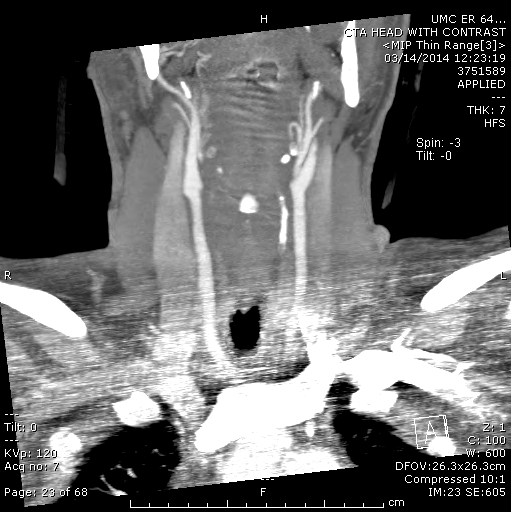
CTA

Carotid artery dissection…

He obviously is not a tPA candidate, but he did go for an intervention procedure with the stroke service.  He did have a clot retrieved, but I have visited him on the floor a few days later and he had no improvement.

He went on to develop cerebral edema as well and had a large hemicraniectomy. He also had an ex-lap for an increase in abdominal distension, and found to have pancreatic ascites (3L removed from the abdomen). The spleen did fine.

Looking back, his mechanism did not support a reason for him to dissect a carotid. He had no external signs of injury, he had no neck pain, my guess is he did have a whiplash type injury but again, not something I expected. In addition, this man had a normal neuro exam upon presentation, full strength, no numbness/tingling with the exception of reporting headache, which I thought was from him striking his head.

After a lit review, there are a few teaching points I want to highlight from this case.

Traumatic Dissection (carotid, vertebral, spinal arteries)

– consider it with hangings, significant head/neck trauma, hyper-extension injuries, lateral rotation injuries of the head, base of the skull fx, c-spine fractures(especially those with displacement or involvement of the transverse foramen,vertebral body), lefort fractures (types II and III), or seat-belt sign over the neck
– Sign/Symptoms vary greatly. Stroke like symptoms are concerning but can be as generalized as headache/migraine, neck pain, neck hematoma, blindness, aphasia, weakness/sensory loss, Horner’s syndrome, tinnitus, CN deficits, diplopia, locked in syndrome, ataxia, vertigo, dizziness

Utility of a CXR

Hey Guys,
Thought I’d post this as I feel it was a mistake on my part, though fortunately no harm came from it.

50 year old guy this past Saturday (which was a ridiculous shift full of drunks and unhelmeted mopeds and motorcyclists with some very sick people) who was an unhelmeted moped rider going reportedly 60mph and wrecked while drinking alcohol and somehow managed not to make their way to Rm 9.
BP: 125/73. HR: 86. RR: 18. O2 saturation: 91% on room air. Temp: 97.6 F (oral)
A&Ox3, c/o shortness of breath and diffuse chest tenderness. Not really any obvious bad looking signs of trauma and had been log-rolled prior to my eval (triaged about 1hr 45min before I saw him).

I saw him, in no respiratory distress, maybe some expiratory wheezing on my exam, but with breath sounds on both sides and no crepitus that I could feel to his anterior chest. I finish my eval and just order a MAN scan based on his Hx and due to his drinking alcohol (EtOh 292)
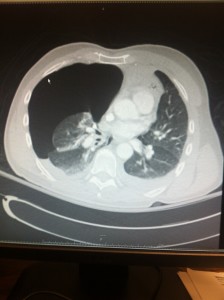
Patient is taken to CT at 23:05 (about 2 hrs after I ordered them) and the nurse grabs me after the scan and tells me I need to look at his chest CT (only his C-spine images were up at the time which showed me all kinds of SubQ emphysema).

Chest CT Pneumo

Just a lesson learned; when it’s super busy like that shift was is when we need to be the most cautious and really think critically about the things we need to do, and not be in a hurry when we’re putting orders in.
The guy is doing well so far (and not intubated) and in THIS case no harm was done, I put a chest tube in without difficulty. But I really should have gotten a CXR to start.
His injuries included Bilateral 1st-6th Rib Fx’s, Pulmonary Contusions, Mediastinal Hematoma, Manubrium Fx, C7 Fx, T4, T7 Fx.

The Cunningham Technique

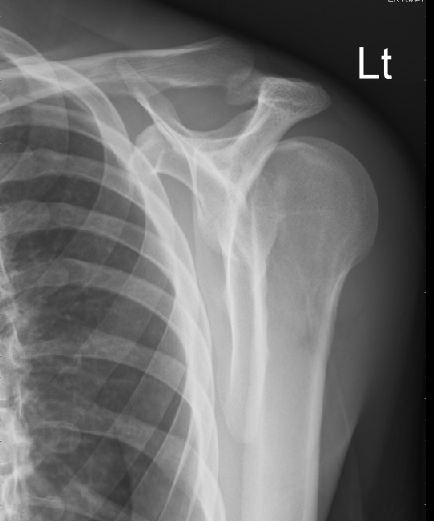
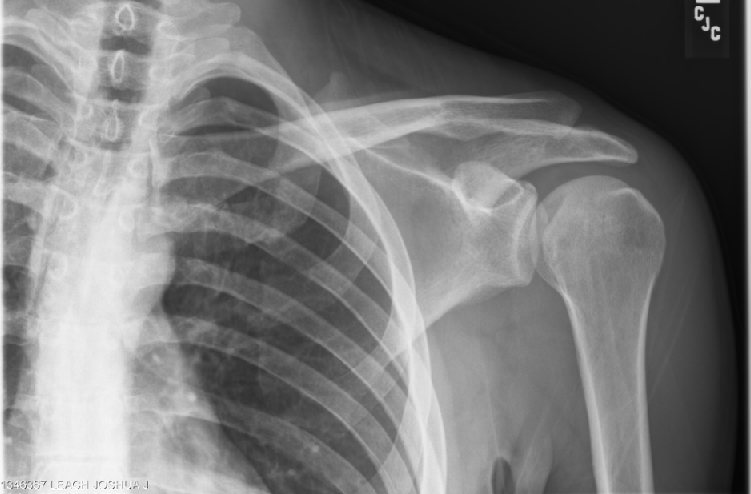
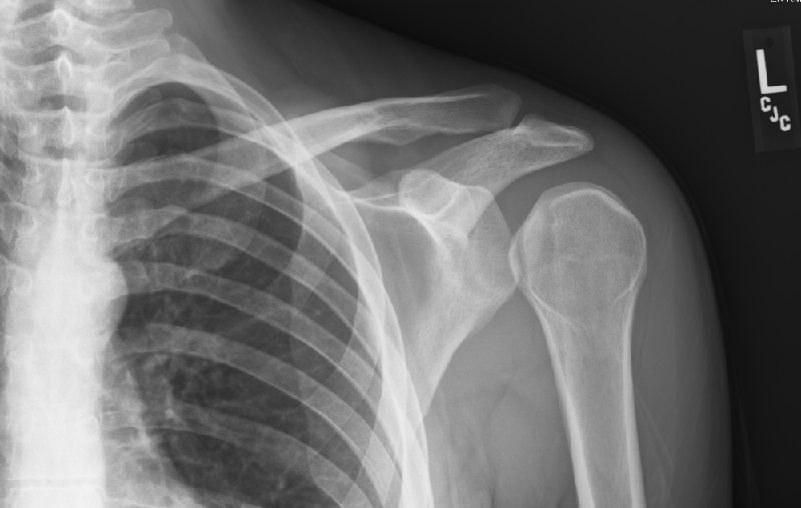
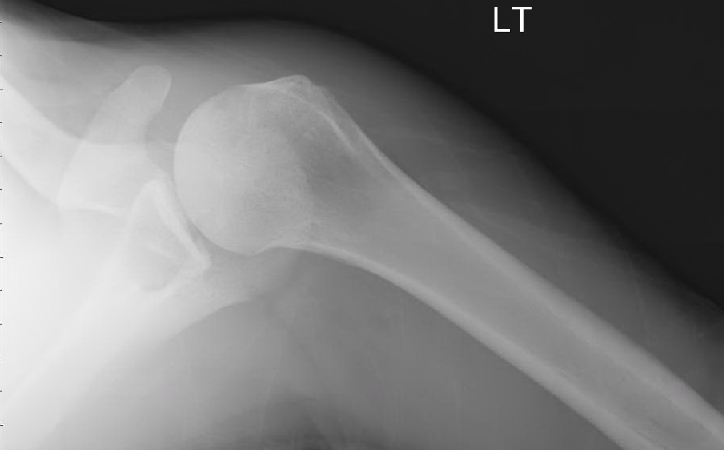
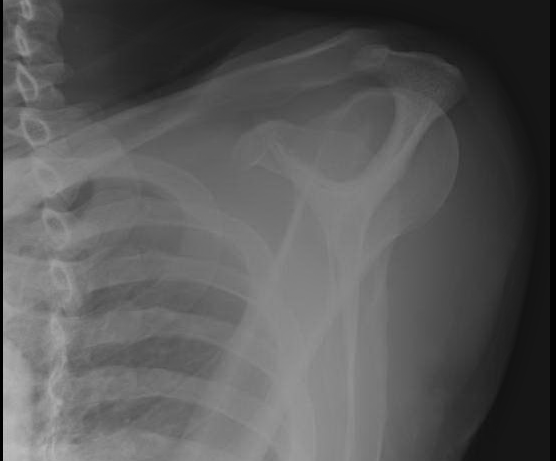
Young male with history of psychiatric illness and seizures presents with left arm pain after a fall. Patient thinks he slipped on ice, but is unsure. He reports no LOC, no head pain, no neck pain. Does not believe he had a seizure. No urinary incontinence, no tongue biting. Has severe pain in left shoulder. Physical exam shows small forehead abrasion, no c-spine tenderness, and decreased ROM to left shoulder.  He holds his arm internally rotated and adducted. There is an obvious deformity to the left shoulder with a defected palpated anterior.

3 view x rays ordered in triage read as negative for fracture or dislocation, but limited by poor patient positioning.

1

2

3

I was pretty sure that it was dislocated, so I went ahead and ordered the definitive axillary view.

As I was charting on another patient, the x-ray tech came over, looking slightly embarrassed, and said that she was pretty sure she had just reduced my patient’s shoulder as she was trying to get him in the proper position for the axillary view.  She said, “It was amazing, he couldn’t move it, then pop, and he has full ROM now.”

Nice.

Two minutes later, got a phone call from radiology…Might have missed a posterior dislocation…Looks great in the axillary view now…Would recommend getting repeat normal films to be sure that there was no fracture missed while it was not in proper position.

4

Ordered the repeat 3 view x-rays and went to make sure he was still reduced.  Found my patient still internally rotated, in pain, not able to move, and still with the hollow anteriorly.  Gently held his hand and arm and before he realized what I had done, pulled slightly and externally rotated and put it back in place.  As I called for the sling, he went to take his gown off and it slid back out as he extended his arm and moved it anteriorly.  Tried again to gently externally rotate it, but he was now on to me and and was tense and pulling against me.  Asked for suggestions other than sedation and got one from the one and only Dr. Martin Huecker: Try the Cunningham technique.

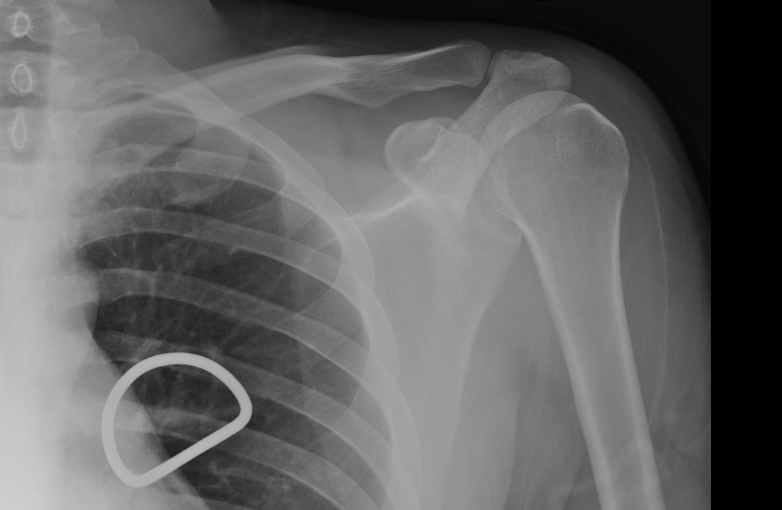
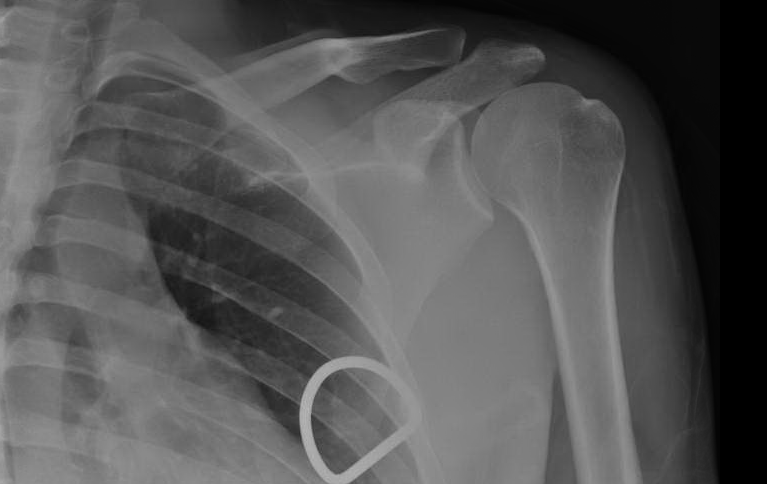
I went back in his room. He was looking a little wary.  I told him it’s not going to hurt; I was just going to massage his arm a little bit to see if it will go back in.  I held his left forearm in my left hand at the elbow and, using my right hand, massaged first his trapezius, then his deltoid, then his biceps, then his deltoid, then his trapezius, then his deltoid ….annnnnnnnnnnnd….. it slid back in place.  Patient looked as surprised as I did.  Immediately put him in a sling and swathe.  Got repeat x-rays in the sling.

5

6

7

He was in the department for about 30 minutes after that while awaiting x-ray reads and his arm stayed reduced while in the splint.  No fractures on x-ray.  He was discharged with orthopedic follow up in the sling.

One can find is a formal description of The Cunningham technique from the blog “Life in the Fast Lane.” http://lifeinthefastlane.com/cunninghams-shoulder-relocation/

  • Inform the patient of the procedure and the fact that it will be painless. It is important to relax the patient and confident reassurance is the first step towards this.
  • Sit the patient up with the back vertical. This can be done on a bed, chair or trolley, but preferably seated on a non-wheeled chair without arm rests.
  • Carefully support the arm while it is moved into the correct position, allowing the patient to help with the other arm. The correct position is with the arm adducted (next to the body) and pointing vertically down, the elbow is flexed at 90 degrees so that the forearm points horizontally and anteriorly.
  • The operator then squats/kneels to the side of the patient and facing the opposite direction to the patient. The operator then slips the hand between the patients forearm and body so that the patient’s wrist/hand is resting on the operator’s upper arm. Do not make pulling movements at any time as this will elicit pain and result in spasm.
  • Apply steady, very gentle traction (the weight of the operators forearm is quite enough) directly downwards once the patient is settled and pain free. Keep this gentle weight on the arm throughout, stop if any spasm or pain. Usually resting with the patients arm in this position will start to reduce the pain of spasm.
  • With the other hand, the operator then massages the trapezius, deltoid and biceps muscle sequentially, repeating this process and concentrating on the biceps brachii until the muscles are fully relaxed. A strong kneading of the biceps with the thumb anterior and the four fingers of the operator posterior to the arm is recommended. At this point the humeral head will relocate usually without any clear indication that the shoulder has reduced (no sound or ‘clunk’ feeling). This means that the shoulder must be observed/checked regularly to confirm when relocation has occurred (with shoulder exposed movement can be seen as the ‘step’ disappears.)

And a link to the blog with the description. It has a nice video.

The Wonder of Ultrasound

Great case I had in December. Overall good month, but this case was especially interesting, and humbling. It combines the excitement of chest pain, the enigma that is leg weakness, and humbling realization of a life threatening diagnosis.

Working in the ED one day and the psychiatry intern goes to see a patient. Routine patient, who had presented with right leg tingling and weakness that made it all the way to the back of the ED. Bed 15. Basic labs pre-ordered as well as a chest X-ray for a brief episode of chest pain that the patient told triage. Of course, the sixth vital sign, an ekg. Intern is with the patient for about 5 minutes and returns. He tells me that he is concerned that the patient is sick and wants me to see the patient sooner than later. He is concerned for possible stroke due to right leg weakness and pain. I tell him of course and I go see the patient.

HPI: 58 y/o AAM with hx of seizures on Dilantin but no other medications or PMH presents with chief complaint of right lower leg pain and tingling. Patient states that while at work today, he was lifting boxes and felt a sharp chest pain that started in the middle of his chest and radiated to between his shoulder blades. It then shot to his pelvis and went away. He went back to work for about 10 minutes then started to have right leg pain. He tried to drive to the hospital, but had to stop and call an ambulance due to sever RLE pain. All other symptoms had resolved at this point. No n/v, diaphoresis, dizziness, loss of bowel or bladder.

Pertinent Hx: NKDA, 30yr pack hx of smoking, dilantin.

Vitals: BP: 148/62, HR 66, RR 18, O2 100% T 98.5

Significant Physical Exam –

RRR, no m/r/g, CTAB, abd soft, nt, nd, no bruit, no pulsating mass

RLE strength 4/5, LLE 5/5.

No DP, PT, popliteal, or femoral pulse in the right leg.

At this point I was concerned. I excused myself and got the bedside ultrasound. In my head I wondered was this just a arterial occlusion, or was this something greater?

4 3 2 1

Well this is when I started to sweat. I tell the patient what I think my diagnosis is, and head back to my desk to get orders going. At this time I review the labs and chest X-ray.

CBC – WNL, CMP – K 3.3, UA WNL, Troponin Neg, Tox Screen Neg, Coags neg.

Chest Xray –

5

Any more concern? At this point I ordered a CTA of the Chest/Abdomen/Pelvis as well as called the surgery team. I wanted to get them involved early in the case that the patient deteriorates. I assessed the patients blood pressure at at the time was 130/60 and HR 58. I got the nurse to get the patient to the CT scanner as well as discussed with the trauma team. At this time patient had stable vital signs and pain controlled with morphine. Trauma evaluated and the CT resulted.

10 9 8 7 6

We now have our diagnosis. When patient got back from CT scanner, his blood pressure was increasing and now 150/80 and HR 68 with increasing pain.

Esmolol gtt was started, arterial line place, and the patient was transferred to another local hospital to undergo cardio-thoracic surgery for repair.

Diagnosis – Aortic Dissection from the level of the aortic valve down through the bifurcation of the iliac arteries. From the one slice, you can see he had no flow to the right leg. CTA demonstrated some collateral from the gastrics, but overall no flow.

Patient outcome – survived surgery. Otherwise have not been able to follow-up past that time. I shared this case because I feel it is a good representation of a case where easy bedside diagnostics can give you the diagnosis early and lead to your diagnosis. With the chest X-ray as well as the bedside ultrasound, we knew what the patient had. The CTA was just icing on the cake. Never be afraid to use the ultrasound. If it had been negative, this could have gone a completely different direction. Credit to the psychiatry resident for getting me involved early.

Use the ultrasound. Use it early. Diagnose early.

Aorta ultrasound.x