Conference notes 9/17

McGowan – Teaching series

Scaffolding – 

  • Establish a baseline (Know your audience)
  • Cues
  • Leading qs vs reflective
  • Breakdown tasks

Ex ) 

  • SOAP notes
  • ACGME milestones
  • Certifying exam checklist
  • Procedural skill learning
  • Sim
  • OSCE
  • SLOE
  • Consider graphic organizers for ddx
    • Gridded Charts
    • Flow charts 
    • Worksheets 

Final thoughts

  • Assess learners baseline
    • Adjust level of intervention based on thiss
  • Have clear objectives
  • Short and sweet
  • break down to smaller tasks
  • Foster safe environment
  • Failing is ok if you learn from it

Coffman – Question

Kelesis – RM9 Follow Up

27 F  w ho asthma, prior suicide attempt presents after unknown but large ingestion ibuprofen

  • 5 large bottles 200mg ibuprofen empty

VBG 7.3/33.5/82/-9.5

CHEM8 139/3.6/108/143/1.14

Lactic 5.0

Intubated for aspiration risk w prop fent

CXR ok

CT head ok

C/f for lactic acidosis (AGMA), bleed, kidney injury

Rpt gas w ph 7.1, lactic to 8.3, Gap 19

HD placed, admitted to MICU underwent HD, still admitted to 3N

Reversible binding COX1/2 -> depletion of thromboxane = bleed

Peak plasma concentration 1-2hrs

Activated charcoal within 2 hrs of ingestion can be considered

Davenport – Shock US

I – indications

A – acquisition

I – interpretation

M – MDM

Pump – heart squeeze, beating, effusion

Pipe – IVC – plump, collapsable

Problem

Cardiogenic shock

  • LV dysfunction w PLAX, PSAX
  • IVC – plethoric
  • EPSS on PLAX
    • Line on mitral valve
    • Measure peak of valve to septum
    • >7 = poor LVEF
  • Lungs
    • Needs to be 15cm to be considered B line
    • Consider turning off tissue harmonics for brighter B line
    • 3 B lines per view for dx

Obstructive

  • Tamponade
    • Speed of accumulation important 
    • Mitral valve inflow integral
      • Doppler at mitral valve outflow on A4C
      • Measure tallest expiration wave to lowest expiration wave
      • >25% = pulsus paradoxus
    • Plethoric IVC
  • PE
    • D sign on PSAX, bc higher pressure in R heart
    • Mcconnel sign on A4C, bc RV free wall hypokinetic
    • Tricuspid annular plane systolic excursion
      • M node on  A4C on tricuspid
        • Measure peak to valley <16-17 = acute heart strain
  • Tension ptx
    • Plethoric ivc
    • Heart could be hyperdynamic, flattening of R heart
    • Lung slide
      • Can mmode for barcode sign
      • US more sensitive than CXR
    • Lung point

Hypovolemic

  • Hyperdynamic echo
  • FAST
  • Aorta – measure outer to outer, anterior to anterior

Distributive 

  • Hyperdynamic echo
  • Flat IVC
  • RUQ
    • Pericholecystic fluid
    • Anterior wall thickening in short access
      • <3mm normal
    • Sonographic murpheys
    • CBD
      • Measure inner to inner

VEXUS (on icu pts s/p open heart sx)

  • Measurement on venous congestion
  • Organ perfusion pressure
  • Determine modality of tx
  • Prevent AKI, HF, pulm edema, poor wound healing

IVC widest diameter in subcostal view, >2cm moveone, less thant 2 = noncongestion

Hepatic vein w indicator towards pt head, find vein entering IVC

  • Doppler

Portal vein w indicator towards back

  • Doppler

Renal vein

Compare waveforms and grade

  • High grade = diuretics

Obrien – Pituitary

Sheehan – pituitary grows in pregnancy but not blood supply, vulnerable to hypotension

  • Tx w hydrocortisone

Pituitary apoplexy 

  • Tx w hydrocortisone to address ACTH deficiency

Acromegaly – excess GH from pituitary adenoma

  • Dx w serum insulin like growth factor level

SIADH – 

  • Tx hypona sz with hypertonic, consider amps of bicarb
    • Aim to correct 4-6 meq/L
    • Beware of cerebral edema
    • Avoid isotonic fluids – makes them worse cause they hold onto free water

Congenital hypopituitary

  • Hypoglycemia, sex organ weirdness, jaundice, midline deficits
  • Tx glucose and hydrocortisone

Optic chiasma – pituitary masses compress this 

  • Bitemporal hemianopsia
  • Little = endocrine issues
  • Big = mass effect

Prolactinoma – most common pituitary tumor

  • Tx cabergoline to inhibit prolactin release
Conference notes 9/10

Zach; Vitamins

B1 Thiamine

  • Deficiency
    • Early Beriberi (wet – cardiac) (dry- muscle wasting)
    • Late Wernicke- Korsakoff 
  • Malnutrition, AIDS, Alcoholics
  • Tx, replete 

B2 Riboflavin

  • Erythematous lesions, ulceration, mucositis
  • Breast fed children, skim milk, pregnant women
  • Tx, replete

B3 Niacin

  • Pellagra
    • 4ds
      • Diarrhea, dermatitis, dementia, death
  • Alcoholics, aids, IBD, malnutrition

B5 Pantothenic Acid

  • Fatigue, headache, muscle weakness, nausea
  • Usually deficient with another b vitamin

B6 Pyridoxine

  • Dermatologic, dental changes
  • Consequence of medicines
    • INH,  valproic acid, phenytoin, hydralazine, carbamazepine
  • Also decreased renal function, autoimmune disease, inborn metabolic errors

B7 Biotin

  • Dermatologic and neurologic manifestation
  • In pregnant women, IBD, isotretinoin, long term antiepileptics 

B9 Folate

  • Megaloblastic anemia, glossitis
  • Don’t confuse w B12
    • Normal MMA, elevated homocysteine
    • Elevated in both for B12
  • Deficiency, pregnancy, burns, alcoholics

B12 Cobalamin

  • Megaloblastic anemia, SCD, neuropathic symptoms
  • Old people, vegans, IBD

C

  • Scurvy
  • Corkscrew hair, gingival hemorrhage, petechiae
  • Malnutrition, alcoholics, pirates

Caroline; Hypoglycemia

  • <70
  • Symptoms generally develop <50-55
  • More common in T1DM vs T2DM
  • Whipple’s triad
    • Do you have low glucose
    • Do you have symptoms from low glucose
    • Do you get better with glucose
  • Mechanisms against hypoglycemia
    • Glycogenolysis, gluconeogenesis
  • S/Sx
    • Adrenergic; anxiety, diaphoresis, hangry, tremor
    • Neuroglycopenic; lethargy, confusion, seizures, agitation
  • Most commonly in diabetics, usually overcorrection
  • Nondiabetics; malnourishment, drugs/alcohol, insulinoma, critical illness, adrenal insufficiency, hypopituitary
  • Workup
    • POC glucose
  • Tx
    • Sugar
    • Glucagon
  • D50 vs D10
    • Risk of overshooting w D50
    • D50 and be caustic
  • Refractory?
    • D10 drip
    • Consider octreotide
  • Has insulin pump?
    • Don’t dc pump
    • Supportive treatment 
    • Contact manufacturer to troubleshoot
  • Pediatric hypoglycemia
    • Often asymptomatic until seizure
    • New onset T1DM
    • Maternal dm in neonates
    • Medicine ingestion; bb, ethanol, sulfonylurea
    • Glucose bolus 2ml/kg D10

Lyvers; pediatric endocrine

Hypoglycemia

  • Causes
    • Fatty oxidation disorder
    • Insulin mediated
    • Ketotic hypoglycemia
    • Disorder of gluconeogenesis
  • Other
    • Ingestion
    • Munchausen

– Obtain critical sample during hypoglycemic <50 episode

– for metabolic disorders

Fatty oxidation

  • Can crump quick when glycogen depleted
  • Test carnitine

Insulin mediated

Ketotic hypoglycemia

  • Glycogen storage disorders
  • Hormone deficiency
    • hypopit
  • Idiopathic (kids grow out of this by 6-8)

Disorders of gluconeogenesis

  • Glactosemia
  • Fructose disorders

Tx – Rule of 50

  • D10 = 5ml/kg
  • D50 = 1ml/kg
  • Consider steroid
  • Glucagon?
    • Only helps with insulin mediated diseases bc they need preexisting hepatic stores of glycogen

Hyperglycemia

  • DKA
    • New onset
      • p/w weight loss, polyuria, polydipsia, vomiting
      • Look for kussmaul  breaths
    • Glucose >200
    • pH <7.3
    • Ketones
  • Tx
    • Correct acidosis, dehydration, glucose
    • Fluid resuscitation
      • Aggressive
      • 10-20 cc/kg bolus LR or NS
      • Add potassium due to shifts intracellularly
        • <3.5 = bolus
        • Defer if >5.5
      • Inulin 0.05 – 0.1 ug/kg
  • Complications
    • Cerebral edema
    • Avoid bicarb
    • Could be from hypoperfusion from dehydration
    • Usually develops first 12hrs
    • Tx, mannitol

Shaw; Acid Base

Look at pH (primary disorder) >  check for compensation 

Respiratory

Metabolic

Metabolic acidosis is usually complicated by compensation

Winters = paCO2 = 1.5 (HCO3) + 8 +- 2

Anion gap = Na – Cl – HCO3

NAGMA = GI vs renal bicarb loss 

  • Body takes in chloride

MUDPILES

Excess anion gap

  • If change in anion gap > change in bicarb then too much bicarb = less acidotic
  • AG – 12 + serum bicarb
    • >30  = 
    • <30 = underlying NAGMA (too  much Cl)

Use base deficit to predict resuscitation goals

VBG for people that don’t need exact pCO2, pulse ox accurate

ABG for people in shock

R acidosis – minute ventilation

R alkalosis – treat underlying cause

M alk – stop offending agent, consider CA inhibitor

M acidosis – treat underlying cause

Bicarb- need control or respirations to make sure co2 is blown off

  • Otherwise benefits are primarily from Na and fluid replacemen t
  • Na blocker overdose

Thomas; DKA/AKA

Gluconeogenesis/ glycogenolysis not as efficient glycolysis

Gluconeo breaks down fats and proteins

  • Fat breakdown = ketones
  • Happens in the liver primarily

Glyco

  • No ketones
  • Happens in muscle and liver

T1DM no insulin production

T2DM insulin resistance

Insulin = store

Glucagon = burn

T1DM more likely to have DKA

AKA

Wide gap acidosis in chronic drinkers

  • Following a binge
  • Abrupt stoppage of drinking prior to ED

Due to shift of carb metab due to malnutrition

Alcohol w no glucose

  • Fasting state = glucagon secretion > gluconeogenesis (mainly lipolysis)
    • If functioning liver

S/Sx 

  • N/V/abd pain
  • Tachycardic, tachypnea

Labs 

  • Etoh often negative
  • Anion gap
  • Usually w LFT abnormality

Does not need to be acidotic 

  • 15% normal ph
    • compensation

Conference notes 9/3

Padget

Alcoholic ketoacidosis

Presents; n, v, dehydration, ams

Suspect in poor po + alcoholism

Alcohol increases NADH/NAD+ = higher ketones and lactic acidosis

  • Malnutrition presents compensation
  • p/w other metabolic derangements

Dx overlaps to some degree w starvation ketosis, DKA

  • Correlate clinically

Tx

  • Thiamine  (WK)
  • Fluids
  • D5LR preferred, thiamine before
  • Can treat glucose >250 w insulin
  • Supportive care otherwise
  • Beware CIWA

If lactic >4 something else going on

Disposition; resolution in symptoms, acidosis = home

Rizzo; small group 

Case 1 – HyperK

  • Ddx; medicines, renal disease, diet, rhabdo
  • Ekg changes, spectrum, peaked t wave – prolonged qrs – sinusoidal 
  • Tx, insulin, glucose, Ca, lasiks, albuterol, fluids, dialysis
    • Ca
      • Gluconate through PIV
      • Chloride in codes, central lines
    • Dialysis
      • K refractory to treatments

Case 2 – HypoK

  • Ekg changes – U waves
  • Ddx; diet, DM, GI loss, medicines
  • Tx;
    • Mg, repletion
    • K repletion
      • 10meq = .1 increase

Case 3 – HypoNa

  • Ddx; Polydipsia, SIADH, polypharm, CKD, aldosterone deficiency
  • Tx; Replete w hypertonic 150mg / 10-20min
    • Can use x2-3 amps bicarb 
  • <120 = ICU
  • Don’t correct too quickly

Case 4 – HyperCa

  • Ddx; exogenous, PTH, genetic disorder, bone resorption, addison, pagets, malignancy, polypharm
  • Tx; Fluids, supportive, Ca binders, bisphos, dialysis
  • EKG changes = osborne J wave, shortened QT

Case 5 – HypoMg

  • Ddx; malnutrition, alcohol, gi loss, renal loss
  • Ekg changes – prolonged qtc, risk for ventricular arrhythmia
  • Tx; replete
    • Beware of rapid infusion – respiratory depression, hyporeflexia, hypotension

Ross; Small group

Case 1 – thyroid storms

  • Precipitant; trauma, infection, contrast, medicines
  • Burch and Wartofsky score to sound smart to endocrinology 
  • Tx
    • Ptu vs methimazole (avoid in 1st trimester pregnancy)
    • Propranolol vs esmolol (beta selective)
    • Iodine, can substitute Li if allergic
    • Steroid
    • Cholestyramine
  • Avoid, amio, asa

Hashimoto – low thyroid

Exogenous – dont need ptu, methimazole

Case 2 – HTN emergency (pheo)

  • Ddx; pheochromocytoma, substance use, idiopathic, kidney disease, carcinoid, angina
  • If pheo/cocaine avoid beta blockade
  • Plasma metanephrines for pheo, urine catacholamines
  • Tx;
    • Phentolamine
    • Oral doxazosin if stable
    • Cardine
    • Nitroprusside
  • Imaging – CT scan w adrenal protocol
  • Associated w MEN2, neurofibromatosis, von hippel lindau
  • Reglan, TCA, steroids can exacerbate
  • Common sx; palpitation, diaphoresis, HA

Case 3 – Myxedema coma

  • Ddx; hypothermia, sepsis, chf, trauma, renal
  • Tx;
    • Levothyroxine, consider T3 too (if TSH> 10)
      • T4 preferred in old people, significant CAD
    • Hydrocortisone if c/f concomitant adrenal insufficiency
    • Passive rewarm
    • Beware of pericardial effusion – low voltage ekg
      • Get an echo

Bequer/Baker; US

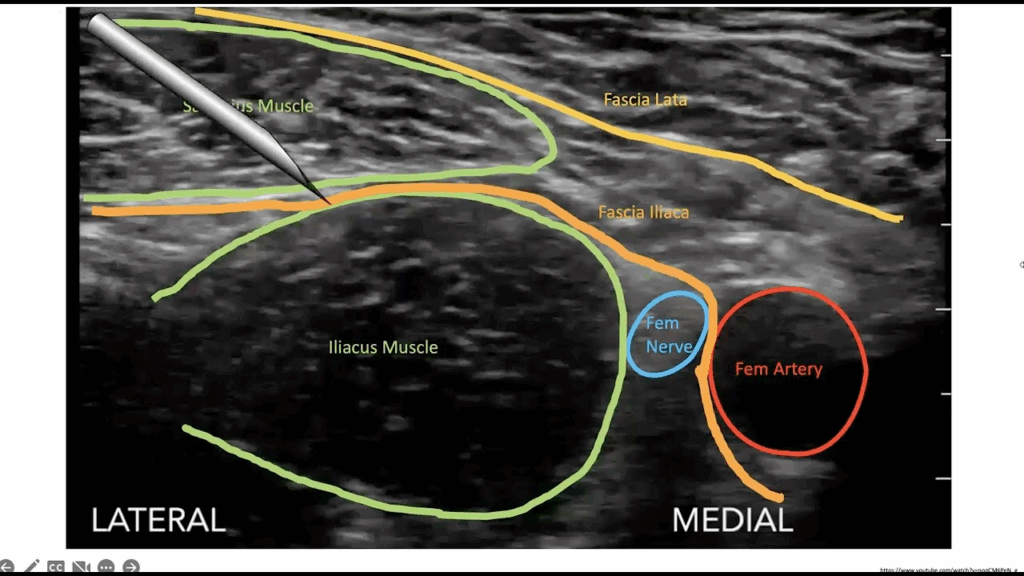
Fascia Iliaca Block

Blocks femoral/obturator/lateral cutaneous nerves

Indications 

  •  femoral head/neck/trochanter fractures
  • Anterior thigh lac/abscess

Careful on anticoagulated pts

Ropivicaine/bupivicaine preferred (longer acting)

Use linear probe

2 person procedure

  • X2 syringe
  • Threeway stopcock

Enter laterally between fascial planes